

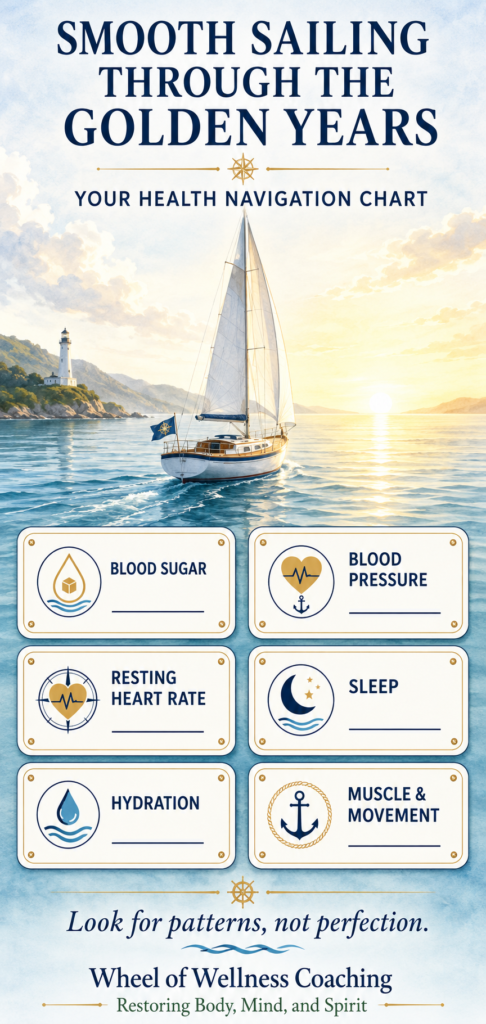
Our body is like a well-built ship.
When we are young, it may carry us through stress, skipped meals, sleepless nights and too much sugar without showing much damage. The body quietly works below deck, repairing and keeping us afloat.
Then a small leak appears.
Blood sugar begins creeping upward. Blood pressure becomes unpredictable. Sleep no longer restores us. We lose muscle, become dehydrated more easily or remain stuck in nervous-system tension.
We may say, “It’s just aging.”
But aging does not mean the ship must sink.
When Small Leaks Become Bigger Problems
Blood sugar, blood pressure, sleep, hydration, muscle and stress are not separate compartments.
Poor sleep can disrupt blood sugar. Chronic stress can raise glucose and blood pressure. Dehydration can cause dizziness, fatigue and heart-rate changes. Muscle loss makes it harder for the body to use glucose.
One leak begins filling another compartment. Soon, we are bailing water instead of repairing the ship.
Blood Sugar: The Fuel System
Blood sugar supplies energy, but the body needs that fuel delivered steadily.
Frequent spikes and crashes can affect energy, mood, blood vessels, nerves and brain health. Meals containing soluble fiber, protein and healthy fat can create a smoother rise and return.
Gentle movement after eating also helps the muscles use glucose.
Blood Pressure: The Pressure in the Pipes
Blood pressure moves oxygen and nourishment throughout the body.
Pressure that remains too high strains the heart and blood vessels. Pressure that falls too low can cause weakness, dizziness or falls—especially when standing.
The goal is not simply the lowest number. It is appropriate pressure for the individual, considering symptoms, hydration, medications, pain and nervous-system function.
Sleep: The Nightly Repair Crew
Sleep is when the repair crew comes aboard.
The body regulates hormones, restores energy and prepares the brain and nervous system for another day. When sleep is repeatedly disrupted, appetite, glucose and blood pressure may become harder to regulate.
A consistent bedtime, morning light and a calming evening routine help the crew do its work.
Hydration: Keeping Everything Flowing
Water supports circulation, digestion, kidney function and temperature control.
As we age, thirst signals may become quieter. Dehydration can appear as fatigue, headache, constipation, dizziness, confusion or a racing heart.
Steady, individualized hydration is usually more helpful than drinking large amounts at once.
Muscle: The Ship’s Framework
Muscle supports balance, protects joints and provides an important place for the body to use glucose.
Losing muscle can increase weakness, insulin resistance and fall risk. Walking, appropriate resistance exercise and adequate protein help maintain the ship’s framework.
The goal is not punishing exercise. It is consistent movement that matches the body’s ability.
The Nervous System: The Captain
The nervous system constantly scans the horizon for danger.
When it senses a storm, heart rate, blood pressure and blood sugar may rise while digestion and sleep slow down. This is helpful during an emergency, but exhausting when the alarm never turns off.
Slow breathing, grounding, prayer, gentle movement, supportive relationships and realistic pacing can help the captain recognize calmer waters.
Check the Instruments
Blood sugar, blood pressure, heart rate and sleep patterns are instruments on the ship’s dashboard—not judgments.
One unusual reading does not always mean disaster. Heat, pain, stress, dehydration, illness and medication can temporarily change the numbers.
Look for patterns, symptoms and changes over time. Monitoring helps us notice the first drip before we are desperately bailing water.
Charting a Healthier Course
We cannot control every wave or storm, but we can care for the vessel.
Stabilize the fuel. Maintain appropriate pressure. Support the repair crew. Strengthen the framework. Help the captain feel safe.
Patch the little leaks.
Watch the instruments.
Adjust the sails.
And give your body the support it needs for smoother sailing through the golden years.
Wheel of Wellness Coaching — Restoring Body, Mind, and Spirit
This article is for education and wellness coaching and is not a substitute for individualized medical advice, diagnosis or treatment.