
When my laboratory testing came back positive for heavy metals, microplastics, fungal toxins and other environmental contaminants, the results were disturbing—but they were not entirely surprising.
I first became aware of the growing problem of environmental pollution in the human body more than twenty years ago. In 2004, the Environmental Working Group and Commonweal collected umbilical-cord blood from ten babies born in American hospitals. The findings were released in the 2005 report Body Burden: The Pollution in Newborns.
Researchers found an average of approximately 200 industrial chemicals and pollutants in each baby, with 287 different chemicals detected across the group. These included pesticides, flame retardants, mercury, chemicals associated with consumer products and waste products from burning coal, gasoline and garbage. These babies had been exposed before taking their first breath.
That report changed the way I thought about health.
It showed me that we do not live separately from our environment. What enters our air, water, soil, food supply, homes and consumer products may eventually enter us. Our bodies are continually interacting with the world around us.
Scientists have also detected microplastic particles in human blood and a growing number of human tissues. Research into what these particles mean for long-term health is still developing, and many questions remain unanswered.
Fungal exposure is another part of this larger environmental story. Certain molds produce substances called mycotoxins, which may contaminate foods such as grains, nuts, spices and dried fruits. Some people may also encounter significant mold exposure in water-damaged buildings. The World Health Organization recognizes mycotoxins as a global food-safety concern, although the meaning of an individual laboratory result must always be evaluated carefully and in context.
My results were not evidence that my body had failed me. They were evidence that my body had been living, breathing and adapting within a polluted world.
This realization has helped me replace shame with awareness. Environmental illness is not a moral failing, nor is it always the result of one bad decision. Exposure can occur through the air we breathe, the food and water we consume, the buildings we occupy and products we use every day.
My journey is now about reducing unnecessary exposures, supporting my body gently and making informed choices without becoming consumed by fear. We cannot eliminate every contaminant from modern life, but we can become more conscious of our surroundings, advocate for cleaner air and water, reduce avoidable exposures and support policies that protect future generations.
The babies whose cord blood was tested in 2004 were already carrying the chemical story of the world into which they were born. My own test results are part of that same larger story.
The purpose of sharing my experience is not to frighten people. It is to remind us that environmental health is human health—and that protecting our planet is also an act of protecting our bodies, our children and every generation still to come.
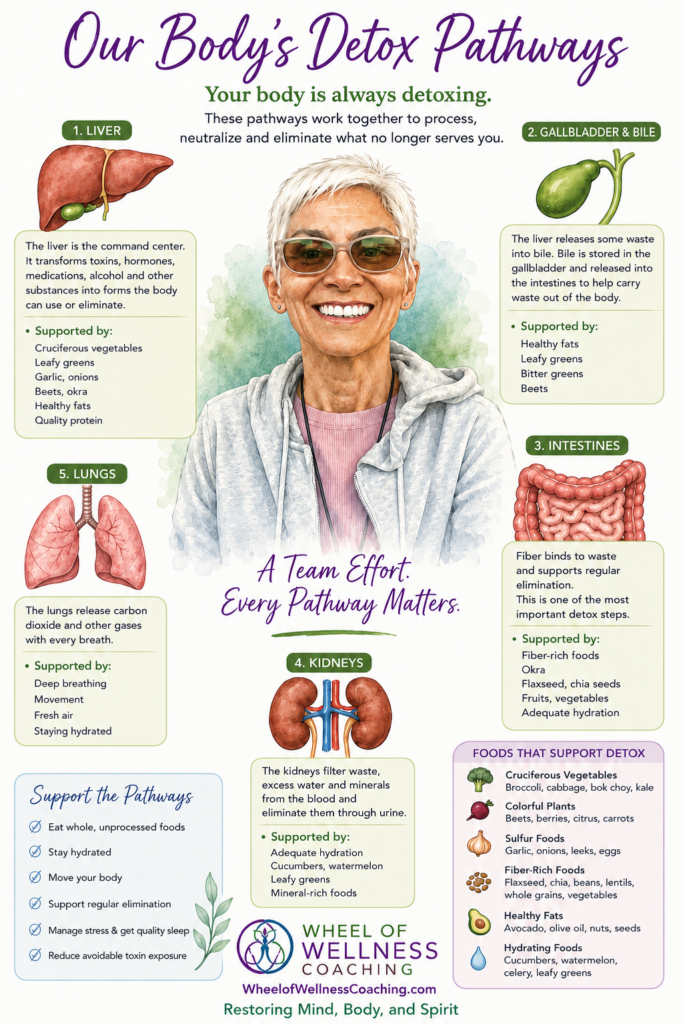
In today’s polluted world, our bodies are constantly working to process and eliminate substances encountered through the air, water, food, buildings, and everyday products. Supporting the liver, kidneys, intestines, lungs, and bile pathways with nourishing foods, hydration, movement, sleep, and regular elimination can help the body perform this important work.
Testing may also provide valuable insight into possible exposure to heavy metals, mold-related toxins, microplastics, and other environmental contaminants. To learn more about available testing and receive guidance on appropriate next steps, please contact me through WheelofWellnessCoaching.com.
Warm regards,
Ronda